
Tea is more than a beverage in China — it is a living tradition that stretches back thousands of years, touching philosophy, medicine, art, and everyday life.
If you are new to Chinese tea, this guide will walk you through the essentials so you can begin your own journey with confidence and appreciation.
The Origins of Chinese Tea
According to legend, tea was discovered around 2737 BCE by the mythical emperor and herbalist Shen Nong.
While boiling water under a tree, leaves from a wild tea plant (Camellia sinensis) drifted into his pot, creating a fragrant infusion that he found both refreshing and medicinal.
Archaeological evidence confirms tea use in China by the Western Zhou dynasty (1046–771 BCE), but tea culture truly flourished during the Tang dynasty (618–907 CE).
The scholar Lu Yu wrote the Classic of Tea (Cha Jing), the world’s first comprehensive book on tea cultivation, processing, and appreciation.
By the Song dynasty, tea had become a refined art form and later spread along the Silk Road and maritime routes to the rest of the world.
The Six Major Types of Chinese Tea
All true tea comes from the same plant, Camellia sinensis.
The huge variety of flavors and aromas comes from how the leaves are harvested, withered, oxidized (or “fermented”), and fired.
- Green Tea (绿茶, lǜ chá)
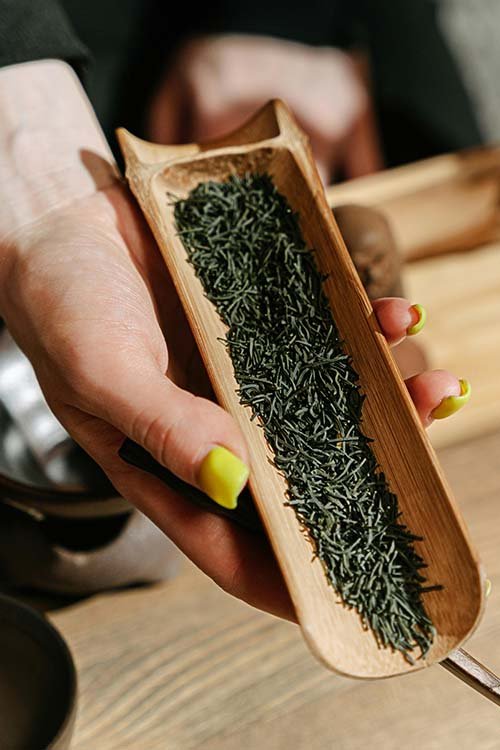
Minimally oxidized, preserving a fresh, grassy, or vegetal character.
Famous examples: Longjing (Dragon Well) from Hangzhou, Huangshan Maofeng, and Biluochun.
A great choice for beginners who want a light, uplifting cup. - White Tea (白茶, bái chá)
Very lightly processed with minimal oxidation.
Known for delicate, floral, and naturally sweet notes.
Popular varieties include Baihao Yinzhen (Silver Needle) and Baimudan (White Peony).
Many white teas age gracefully and develop deeper flavors over time. - Yellow Tea (黄茶, huáng chá)
Rare and gently oxidized, with a unique “yellowing” step during processing.
Milder than most green teas, with a soft, subtle sweetness.
Junshan Yinzhen is the most famous representative of this category. - Oolong Tea (乌龙茶, wū lóng chá)
Partially oxidized, making it the “in-between” category between green and black tea.
Flavor ranges from light and floral (such as Tieguanyin) to dark and roasted (like Wuyi Rock Teas such as Da Hong Pao).
Oolongs are prized for their complexity and rich aromas. - Black Tea (红茶, hóng chá — literally “red tea” in Chinese)
Fully oxidized, producing a bold, malty, and sometimes honey-like profile.
Classic examples include Keemun (Qimen) and Yunnan Dian Hong.
This is what most Western drinkers recognize as “black tea.” - Dark Tea (黑茶, hēi chá)
Post-fermented teas, including Pu-erh (普洱), often compressed into cakes or bricks that can improve with age.
Known for earthy, deep flavors and commonly associated with digestive benefits in traditional Chinese views.
Raw (sheng) Pu-erh starts bold and evolves over time, while ripe (shou) Pu-erh is smoother and often more accessible for beginners.
Essential Tea Tools for Beginners
You do not need an elaborate setup to begin enjoying Chinese tea.
A few simple tools can already give you a great experience:
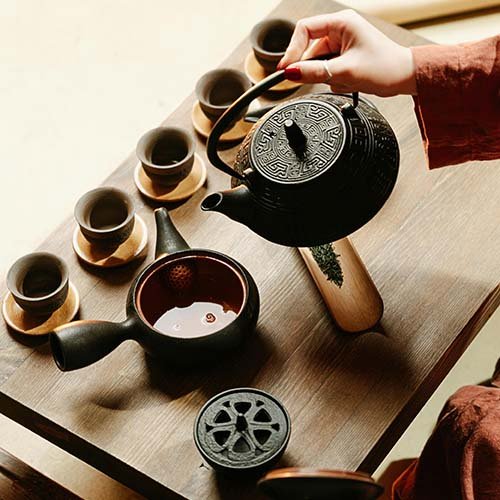
- Gaiwan (盖碗): A lidded bowl that is one of the most versatile brewing vessels in China.
- Teapot: Yixing purple clay (zisha) teapots are treasured because their porous clay “remembers” the tea and can improve the flavor over time, but starting with a simple glass or porcelain teapot is perfectly fine.
- Fairness Cup (公道杯) and small tasting cups: The fairness cup helps distribute the tea evenly so everyone gets the same strength.
- Tea Tray: Useful for catching spills and draining excess water during brewing.
- Kettle: Use filtered water and pay attention to temperature: around 70–85°C for green and white teas, and about 90–100°C for oolong, black, and dark teas.
The Spirit of Gongfu Tea
Gongfu cha (功夫茶) literally means “tea with skill” or “tea made with effort.”
Rather than a rigid ceremony, it is a mindful, social way of brewing that emphasizes focus, hospitality, and many short infusions to reveal the tea’s changing character.
Basic Steps for a Beginner Gongfu Session
- Warm all your vessels with hot water.
- Add the tea and quickly rinse the leaves to “awaken” them and wash away dust.
- Brew in short infusions, usually 10–30 seconds at first, increasing the time gradually.
- Pour the tea into a fairness cup, then distribute it into small cups and taste slowly.
This process encourages you to be present, noticing how the aroma, color, and taste evolve across each infusion.
Many teas can be steeped 6–10 times or even more.
Cultural Meaning and Etiquette
In China, offering tea is a gesture of respect, hospitality, and connection.
Sharing tea is seen as a way to create harmony among people.
Key ideas include:
- Harmony with nature: Tea reflects the season, the land where it was grown, and the skill of the people who picked and processed it.
- Health and balance: In traditional Chinese medicine, different teas can be seen as cooling or warming, supporting digestion, clearing heat, or boosting energy (qi).
- Mindfulness: The quiet focus of brewing tea is often compared to meditation, painting, or calligraphy.
- Social bonding: From relaxed family gatherings to formal business meetings, tea gently supports conversation and understanding.
Simple etiquette tips:
- Receive cups with both hands to show respect.
- Avoid pointing the spout of a teapot directly at someone.
- Refill others’ cups before your own as a sign of care and politeness.
Getting Started Today
If you are ready to begin:
- Choose high-quality loose-leaf tea from a reputable vendor and avoid tea bags for your first “real” experience.
- Start with a mild green tea or a ripe (shou) Pu-erh to explore two very different styles.
- Use water just off the boil for most teas, and avoid boiling water directly on delicate green teas.
- Experiment with brew times and leaf amounts, and take simple notes on what you like.
- Consider joining online communities or visiting local Chinese tea houses for tastings and guidance.
Chinese tea culture is not about strict rules — it is an invitation to slow down, connect, and discover.
Whether you enjoy a single daily cup or dive deep into aged Pu-erh and ancient traditions, the journey itself is the reward.
Next time you brew a cup, pause to watch the leaves dance in the water.
In that quiet moment, you are participating in one of humanity’s oldest and most elegant cultural traditions.
What tea will you try first? Feel free to share your explorations and discoveries.